Nestled in the heart of Bavaria, Nuremberg (Nürnberg in German) stands as one of Germany’s most historically significant cities, where medieval architecture seamlessly blends with modern urban life. This comprehensive travel guide will take you through the cobblestone streets of the Old Town, explore the imposing Imperial Castle, and uncover the layers of history that have shaped this remarkable destination.
Why Nuremberg Should Be on Your Travel List
Nuremberg offers visitors an authentic medieval experience unlike any other European destination. The city’s perfectly preserved Old Town transports you back to the Holy Roman Empire era, while its complex 20th-century history provides profound insights into Germany’s past. From the towering Kaiserburg to the charming Christmas markets, Nuremberg delivers a rich tapestry of experiences that satisfy history enthusiasts, architecture lovers, and cultural explorers alike.
The city’s strategic location makes it an ideal base for exploring Bavaria, while its compact size ensures you can experience its highlights in just a few days. Whether you’re interested in medieval history, World War II sites, or traditional Franconian culture, Nuremberg provides an immersive journey through time.
Exploring Nuremberg’s Medieval Old Town
The Historic City Walls and Gates
Nuremberg’s medieval city fortifications represent one of Europe’s most complete defensive systems. The 4-kilometer-long wall circuit, punctuated by 80 towers and four main gates, has protected the city for over 600 years. Begin your exploration at the Hauptbahnhof (main train station) and walk toward the Old Town through one of these magnificent gates.
The Königstor (King’s Gate) serves as the primary entrance from the train station, while the Frauentor showcases impressive medieval engineering. Take time to walk along sections of the wall for panoramic views of both the Old Town and modern Nuremberg.
Hauptkirche St. Lorenz: Gothic Architectural Marvel
The Church of St. Lawrence dominates the southern Old Town with its twin Gothic spires reaching 81 meters into the sky. This 13th-century masterpiece houses remarkable artistic treasures, including Veit Stoss’s wooden Annunciation sculpture and the stone tabernacle by Adam Kraft. The church’s stunning rose window and intricate stonework exemplify German Gothic architecture at its finest.
Visitors can climb the tower during summer months for breathtaking views over the red-tiled rooftops. The church also serves as a venue for classical concerts, adding a musical dimension to your historical exploration.
Hauptmarkt and the Beautiful Fountain
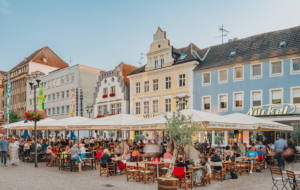
The Hauptmarkt (Main Market Square) forms the beating heart of Nuremberg’s Old Town. This bustling square hosts the famous Christmas market each December, but its charm extends throughout the year. The Gothic Frauenkirche (Church of Our Lady) presides over the square, featuring the fascinating Hauptmannlein clock that performs daily at noon.
The ornate Schöner Brunnen (Beautiful Fountain) stands as the square’s centerpiece, its 19-meter Gothic spire adorned with 40 colorful figures representing the Holy Roman Empire’s hierarchy. Legend claims that turning the golden ring embedded in the fountain’s railing brings good luck—a tradition worth experiencing during your visit.
Kaiserburg: The Crown Jewel of Imperial History
Exploring the Imperial Castle Complex
Perched atop a sandstone ridge, Nuremberg Castle (Kaiserburg) represents one of Europe’s most important imperial palaces. This massive complex served as the preferred residence of Holy Roman Emperors for over 500 years, making it a symbol of imperial power and medieval grandeur.
The castle divides into three distinct sections: the Imperial Castle proper, the Burggrave’s Castle, and the Imperial City fortifications. Each area offers unique insights into medieval court life, defensive architecture, and the Holy Roman Empire’s political structure.
Key Attractions Within the Castle
- Palas (Imperial Palace): Houses the Double Chapel and Imperial Hall with authentic medieval artifacts
- Sinwell Tower: Provides panoramic views across Nuremberg and the Franconian countryside
- Deep Well: Demonstrates medieval engineering with its 50-meter depth carved through solid rock
- Imperial Chapel: Features two-story design reflecting medieval social hierarchy
Allow at least two hours for a thorough exploration, including time to appreciate the castle gardens and defensive ramparts. The audio guide provides excellent historical context and architectural details.
Museums That Bring History to Life
German National Museum
The Germanisches Nationalmuseum ranks among Germany’s largest cultural history museums, housing over 1.3 million artifacts spanning German culture from prehistoric times to the present. The museum’s medieval collection includes masterworks by Albrecht Dürer, Veit Stoss, and Tilman Riemenschneider.
Highlights include the world’s oldest surviving globe, medieval musical instruments, and an extensive collection of German folk art. The museum building itself combines historic monastery architecture with modern exhibition spaces, creating an engaging environment for exploration.
Documentation Center Nazi Party Rally Grounds
Nuremberg’s 20th-century history demands acknowledgment alongside its medieval heritage. The Documentation Center provides comprehensive insights into the Nazi regime’s use of Nuremberg as a propaganda stage. Located in the unfinished Congress Hall, this museum examines how the Nazis exploited the city’s imperial symbolism.
The permanent exhibition “Fascination and Terror” uses multimedia presentations, artifacts, and survivor testimonies to explore this dark chapter. The adjacent rally grounds, where massive Nazi gatherings occurred, now serve as a sobering reminder of history’s lessons.
Albrecht Dürer House
Step into the world of Germany’s greatest Renaissance artist at Albrecht Dürer’s House, where the master lived and worked from 1509 to 1528. This beautifully preserved half-timbered building showcases period interiors, original printing equipment, and replica artworks demonstrating Dürer’s revolutionary techniques.
Interactive demonstrations of Renaissance printing and painting methods provide hands-on understanding of artistic processes. The house’s top floor offers views across the Old Town that inspired many of Dürer’s cityscapes.
Traditional Franconian Cuisine and Local Specialties
Must-Try Local Dishes
Nuremberg’s culinary heritage reflects its position at the crossroads of German trade routes. Nürnberger Bratwurst represents the city’s most famous export—small, seasoned sausages traditionally served in groups of six, eight, or twelve with sauerkraut and mustard.
Other regional specialties include:
- Saure Zipfel: Bratwurst simmered in vinegar broth with onions
- Schäuferla: Roasted pork shoulder, a Franconian favorite
- Lebkuchen: Nuremberg’s world-famous gingerbread, perfect year-round
- Franconian Wine: Local vintages from the surrounding wine regions
Historic Restaurants and Beer Gardens
Experience authentic Franconian hospitality in Nuremberg’s traditional restaurants. Zum Gulden Stern, dating to 1419, claims to be the world’s oldest bratwurst restaurant. Albrecht Dürer Stube offers medieval ambiance near the castle, while Barfüßer combines historical architecture with craft brewing.
For outdoor dining, the Tiergarten Beer Garden provides a relaxed atmosphere under ancient trees, while Kettensteg offers riverside dining with Old Town views.
Planning Your Visit: Practical Information
Best Times to Visit
Nuremberg welcomes visitors year-round, with each season offering distinct advantages. Spring (April-May) brings mild weather and fewer crowds, ideal for walking tours and outdoor exploration. Summer (June-August) provides the warmest weather and longest daylight hours, though popular attractions may be crowded.
Fall (September-October) offers comfortable temperatures and beautiful foliage, while winter (November-March) transforms the city into a magical Christmas market destination, though expect cold weather and shorter days.
Transportation and Getting Around
Nuremberg’s excellent public transportation system includes metros (U-Bahn), trams, and buses operated by VGN. The Nuremberg Card provides free public transport and discounts to major attractions, making it an economical choice for visitors staying 2-3 days.
The compact Old Town is easily walkable, with most major attractions within 15 minutes of each other. Bicycle rentals offer another eco-friendly option for exploring the city and surrounding areas.
Accommodation Recommendations
Stay within the Old Town for maximum historical immersion. Hotel Drei Raben offers boutique accommodations with modern amenities in a historic setting. Le Méridien Grand Hotel Nürnberg provides luxury accommodations near the train station, while budget travelers can choose from several hostels and guesthouses within the city walls.
Day Trips and Extended Exploration
Nearby Medieval Towns
Nuremberg’s central location makes it an excellent base for exploring Franconia’s medieval heritage. Bamberg, a UNESCO World Heritage site 45 minutes by train, offers pristine medieval architecture and excellent beer culture. Rothenburg ob der Tauber, though farther afield, represents Germany’s best-preserved medieval town.
Coburg features an impressive fortress and links to European royalty, while Bayreuth combines baroque architecture with Wagner’s musical legacy.
The Romantic Road
Nuremberg serves as the northern terminus of Germany’s famous Romantic Road (Romantische Straße), a 400-kilometer route connecting medieval towns and castles. This scenic drive or organized tour takes you through Dinkelsbühl, Nördlingen, and eventually to Neuschwanstein Castle in Bavaria’s Alps.
Conclusion: Embracing Nuremberg’s Timeless Appeal
Nuremberg masterfully preserves its medieval character while confronting its complex modern history, creating a destination that educates, inspires, and entertains. The city’s cobblestone streets echo with centuries of imperial grandeur, artistic achievement, and human resilience.
Whether you’re drawn by the romance of medieval architecture, the weight of historical significance, or the warmth of Franconian hospitality, Nuremberg delivers an unforgettable travel experience. Plan your visit to this remarkable city where past and present converge, and discover why Nuremberg continues to captivate travelers from around the world.
Start planning your medieval adventure today—book your accommodation, research opening hours for key attractions, and prepare to step back in time in one of Germany’s most historically rich destinations.