
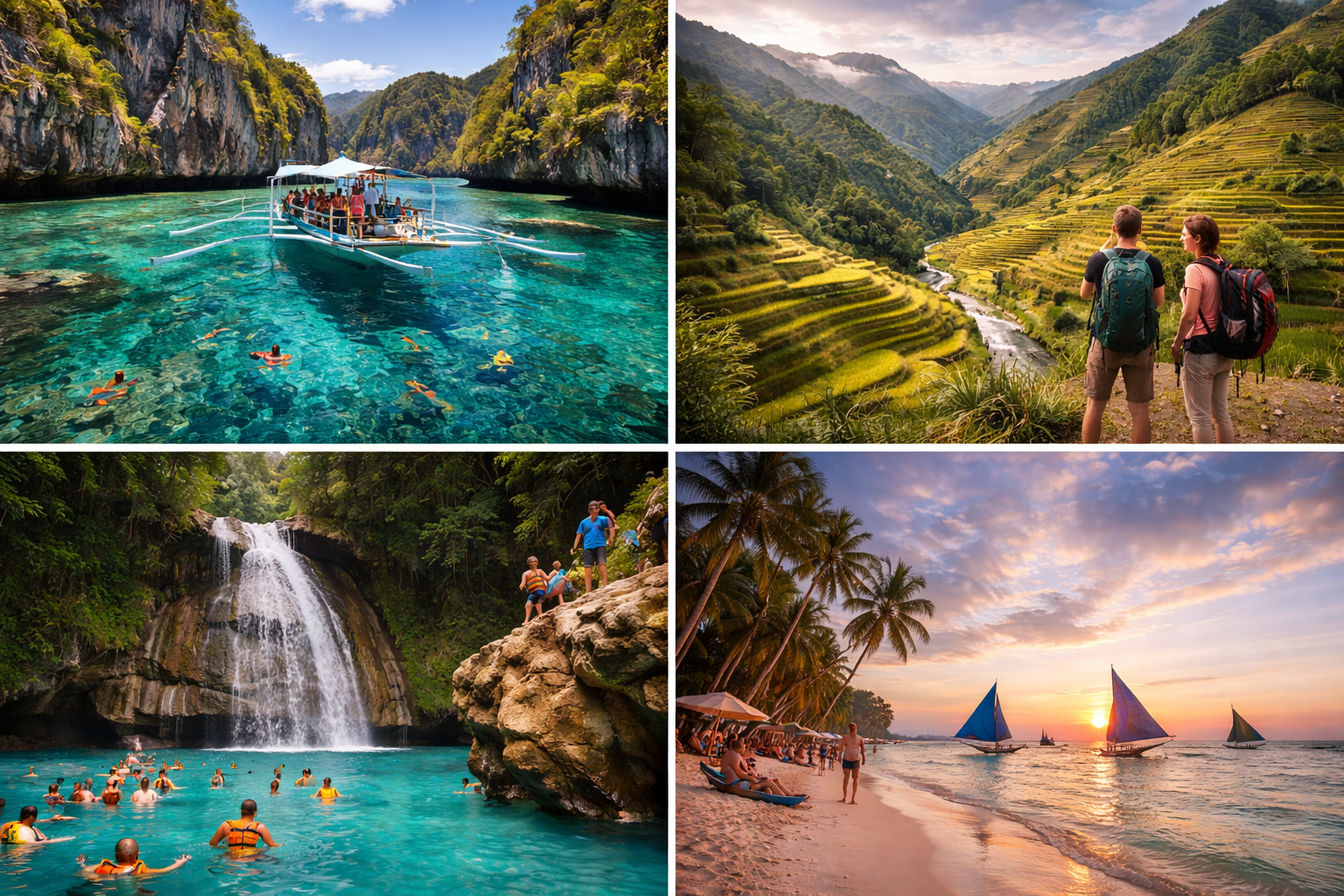
Discover paradise islands, hidden lagoons, and bucket-list adventures that transform ordinary vacations into life-changing experiences
The Philippines isn’t just a destination—it’s a revelation. With over 7,600 islands scattered across crystalline waters, this Southeast Asian archipelago offers travelers an embarrassment of riches that few places on Earth can match. From the legendary limestone karsts of Palawan to the chocolate-colored hills of Bohol, every corner of this tropical wonderland promises adventures that linger in your memory long after you’ve returned home.
Whether you’re chasing Instagram-worthy sunsets, diving into underwater wonderlands, or seeking authentic cultural immersions, the Philippines delivers experiences that exceed even the wildest expectations. This comprehensive guide reveals the absolute best tours in the Philippines across the archipelago, carefully curated to help you craft the Philippine adventure of a lifetime.
Table of Contents
Why the tours in the Philippines Should Top Your Travel Bucket List

Before diving into specific tours, it’s worth understanding what makes the Philippines such an extraordinary destination. The country consistently ranks among the world’s most beautiful places, earning accolades from travel publications and wanderlust-driven adventurers alike.
The warmth of Filipino hospitality—locally known as “malasakit”—transforms every interaction into something meaningful. English is widely spoken, making navigation effortless for international visitors. The cost of travel remains remarkably affordable compared to neighboring destinations, stretching your budget further without compromising on quality experiences.
Most importantly, the sheer diversity of landscapes packed into this island nation is staggering. You can kayak through bioluminescent waters one day, trek through ancient rice terraces the next, and swim with whale sharks the day after. This variety ensures that whether you’re a beach devotee, adventure seeker, history buff, or foodie, the Philippines has something tailored precisely to your passions.
Palawan: The Last Frontier
El Nido Island Hopping Tours
El Nido rightfully claims its throne as one of the most spectacular destinations in the Philippines. The island-hopping tours here aren’t merely excursions—they’re journeys into a world that seems almost too beautiful to exist.
Tour A (Big Lagoon and Small Lagoon) stands as the most popular option, and for excellent reason. Kayaking through the Big Lagoon’s towering limestone cliffs feels like paddling into a prehistoric realm. The turquoise waters reflecting against dramatic karst formations create scenes that cameras struggle to capture adequately. The Secret Lagoon, accessible through a small crevice, rewards swimmers with an intimate pool surrounded by ancient rock walls.
Tour C appeals to snorkeling enthusiasts and those seeking slightly fewer crowds. Helicopter Island earned its name from its distinctive shape, and its surrounding waters teem with marine life. The Hidden Beach requires swimming through a narrow passage, but the secluded paradise on the other side makes every stroke worthwhile.
Tour D combines the best of both worlds, featuring Ipil Beach’s pristine shoreline, Cadlao Lagoon’s serene waters, and Nat Nat Beach’s powdery white sand. This tour attracts fewer visitors, making it ideal for travelers who prefer tranquility over bustling hotspots.
For the most magical experience, consider booking a private tour that allows flexibility in timing. Arriving at lagoons during early morning or late afternoon dramatically reduces crowds while offering superior lighting for photography.
Puerto Princesa Underground River Tour
The Puerto Princesa Subterranean River National Park holds UNESCO World Heritage status for compelling reasons. This 8.2-kilometer underground river system ranks among the world’s longest navigable underground rivers and was named one of the New Seven Wonders of Nature.
The boat journey through the cave system reveals cathedral-like chambers adorned with limestone formations sculpted over millions of years. Stalactites and stalagmites create surreal shapes—guides point out formations resembling vegetables, holy figures, and animals. The experience feels genuinely otherworldly, particularly when your boat ventures deep enough that complete darkness envelops everything except your guide’s flashlight.
Booking in advance is essential, as daily visitor numbers are strictly limited to protect this fragile ecosystem. Tours typically depart from Sabang, requiring a scenic 1.5-hour van ride from Puerto Princesa City followed by a boat transfer to the cave entrance.
Coron Island Tours
Coron, located in the northern reaches of Palawan, offers a distinctly different flavor of paradise. Here, freshwater lakes sit atop limestone islands, WWII shipwrecks rest beneath the waves, and hot springs bubble from the earth.
The Coron Island Escapade Tour grants access to Kayangan Lake, frequently cited as the cleanest lake in the Philippines. The climb to the viewpoint challenges even fit travelers, but the panorama of emerald waters encircled by jagged cliffs justifies every bead of sweat. Barracuda Lake delivers an unusual swimming experience—its thermocline layers transition from warm to hot to cool as you descend, creating a sensation unlike anything else.
Wreck diving tours attract underwater enthusiasts from around the globe. Japanese supply ships sunk during World War II now serve as artificial reefs, home to spectacular marine ecosystems. The Akitsushima and Irako wrecks particularly captivate experienced divers, though snorkelers can also glimpse the Skeleton Wreck in shallower waters.
Bohol: Where Nature Defies Imagination
Chocolate Hills and Tarsier Sanctuary Tour
Bohol’s Chocolate Hills rank among the Philippines’ most iconic natural formations. Over 1,200 perfectly cone-shaped hills spread across the landscape, turning chocolate brown during the dry season—hence their delicious name. Standing at the viewing platform, surveying this geological wonder, evokes a sense of witnessing something truly extraordinary.
Most tours combine the Chocolate Hills with a visit to the Philippine Tarsier Sanctuary in Corella. These tiny primates—among the world’s smallest—have enormous eyes and peculiar expressions that captivate every visitor. The sanctuary’s conservation-focused approach ensures these endangered creatures receive proper protection while still allowing respectful observation.
Additional stops typically include the Baclayon Church, one of Asia’s oldest churches, the Man-Made Forest’s cathedral of mahogany trees, the Loboc River cruise with floating buffet lunch, and the Hanging Bridge in Sevilla. This full-day tour encompasses Bohol’s greatest hits efficiently, though rushing detracts from the experience. Consider breaking the itinerary across two days if your schedule permits.
Panglao Island Beach Hopping and Dolphin Watching
Panglao Island, connected to Bohol by bridge, boasts some of the region’s finest beaches. Alona Beach serves as the main tourist hub, offering excellent dining, nightlife, and dive shops. However, the island holds quieter treasures for those willing to explore further.
Dolphin watching tours depart before dawn, heading to Balicasag Island where pods of spinner dolphins perform their acrobatic displays. Witnessing these graceful creatures leaping and spinning in their natural habitat creates moments of pure joy. After the dolphin encounter, tours typically continue to Balicasag’s marine sanctuary for world-class snorkeling among teeming coral gardens and sea turtles.
Virgin Island emerges from the sea during low tide, creating a stunning sandbar perfect for wading in crystal-clear shallows. The phenomenon requires proper timing, so consult local tour operators about optimal visiting windows.
Cebu: Adventure and Heritage Combined
Kawasan Falls Canyoneering
The Kawasan Falls canyoneering experience delivers pure, unadulterated adventure. This increasingly popular tour takes participants through a spectacular river canyon, involving cliff jumps, natural water slides, swimming through rushing waters, and bamboo rafting beneath thundering waterfalls.
The journey begins in Badian, where experienced guides lead groups through a series of challenges perfectly calibrated to thrill without terrifying. Jump heights vary from manageable 3-meter plunges to heart-pounding 15-meter leaps—participants choose their comfort level. The crystal-clear turquoise waters cushion every landing, and the surrounding jungle canyon provides a stunning backdrop throughout.
The tour culminates at Kawasan Falls itself, where three cascading tiers of waterfalls create one of the Philippines’ most photographed natural attractions. Swimming beneath the main falls while powerful water pounds down from above ranks among the most exhilarating experiences available in the country.
Oslob Whale Shark Interaction
Oslob offers something genuinely extraordinary: the opportunity to swim alongside whale sharks, the world’s largest fish. These gentle giants, reaching lengths of up to 12 meters, visit Oslob’s waters daily, drawn by the local feeding program.
The experience commands respect and humility. Floating in the water as these magnificent creatures glide past, their spotted patterns glistening in the filtered sunlight, humbles even the most seasoned travelers. The sheer scale of these animals defies comprehension until you’re mere meters away.
Important ethical considerations surround this activity. The feeding program has generated controversy among marine conservationists, as it alters the whale sharks’ natural behavior. Visitors should research the situation thoroughly and make informed decisions. If you do participate, choosing operators who enforce strict guidelines—no touching, maintaining appropriate distance, limited interaction time—helps minimize negative impacts.
Cebu City Heritage Walking Tour
Beyond its natural attractions, Cebu holds profound historical significance as the birthplace of Christianity in the Philippines. Walking tours through Cebu City’s heritage sites reveal layers of Spanish colonial history, religious tradition, and cultural evolution.
Magellan’s Cross, housed in a chapel beside the Basilica Minore del Santo Niño, marks the spot where Ferdinand Magellan planted a cross upon arriving in 1521. The Basilica itself houses the country’s oldest religious artifact—the Santo Niño de Cebu statue. Fort San Pedro, the oldest triangular fort in the country, tells stories of Spanish defense against Moro raiders.
These tours work best with knowledgeable local guides who can breathe life into historical narratives and reveal hidden corners that independent exploration would miss.
The Visayas: Island Paradise Perfected
Siargao Island Tour
Siargao has transformed from a sleepy surf destination into one of Asia’s coolest island destinations. The teardrop-shaped island in the Philippines’ east maintains its laid-back surf culture while offering diverse experiences beyond the waves.
Island hopping tours visit the Instagram-famous Naked Island (a pristine sandbar with zero vegetation), Daku Island (perfect for beach barbecues under palm trees), and Guyam Island (a tiny palm-fringed paradise). The Sugba Lagoon, a short boat ride from the mainland, provides excellent paddleboarding conditions in its protected jade-green waters.
The Magpupungko Rock Pools reveal tidal pools carved into natural rock formations during low tide. Timing visits correctly—consulting tide charts is essential—allows swimming in crystal-clear natural pools while waves crash dramatically nearby.
Surfers make pilgrimage to Cloud 9, the legendary break that hosts international competitions. Even non-surfers enjoy watching skilled riders tackle the hollow barrels during swell season from September to November.
Siquijor Mystical Island Tour
Siquijor carries an air of mystery that sets it apart from other Philippine islands. Long associated with traditional healing practices and folk magic, this small island offers both natural beauty and cultural intrigue.
Day tours circumnavigate the island, stopping at Cambugahay Falls (a multi-tiered waterfall perfect for rope swings), Salagdoong Beach (featuring cliff jumping platforms), and the century-old Balete Tree (where a giant banyan tree houses a fish spa in its spring-fed pool).
The island’s healing traditions continue through “mananambal” (folk healers) who practice during Holy Week. Visitors respectful of local customs can learn about these traditions, which blend indigenous beliefs with Catholic practices in fascinating ways.
Luzon: Where Mountains Meet the Sea
Batanes Scenic Tour
Batanes stands apart from everywhere else in the Philippines. This northernmost province, closer to Taiwan than Manila, offers landscapes more reminiscent of Ireland or Scotland than tropical Southeast Asia. Rolling green hills, stone houses, dramatic coastlines, and perpetual winds create an atmosphere unlike anywhere else in the archipelago.
Tours explore the three inhabited islands: Batan, Sabtang, and Itbayat. Batan Island features Valugan Boulder Beach, where centuries of typhoons have deposited massive stones along the coastline, and the Marlboro Hills’ verdant expanses. Sabtang Island preserves traditional Ivatan stone houses and villages that appear frozen in time.
The Ivatan people maintain distinct cultural traditions, including their iconic “vakul” headgear and “chawa” vessel hats, designed for protection against the fierce winds. Interacting with this warm, resilient community adds immeasurable depth to the Batanes experience.
Due to limited infrastructure and unpredictable weather (flights frequently cancel), Batanes requires flexible planning. The effort proves worthwhile—this remains the Philippines’ most underrated destination.
Banaue Rice Terraces Trekking
The Banaue Rice Terraces, carved into mountain slopes by Ifugao ancestors over 2,000 years ago, represent one of humanity’s greatest engineering achievements. These UNESCO World Heritage terraces climb mountain walls like giant staircases, creating vistas that have earned them the nickname “Eighth Wonder of the World.”
Trekking tours range from gentle village walks to multi-day adventures deep into the Cordillera mountains. The trek to Batad, a remote village nestled within an amphitheater of terraces, rewards hikers with some of the most spectacular viewpoints. The challenging trail to Tappiya Falls descends through terraces before revealing a powerful waterfall cascading into a natural pool.
Engaging local Ifugao guides not only supports community tourism but provides invaluable cultural context. Learning about traditional farming methods, indigenous spirituality, and the challenges facing terrace preservation enhances appreciation for this living cultural landscape.
Subic Bay Adventure Tours
Subic Bay has reinvented itself from former US naval base to premier adventure destination. The surrounding Subic Bay Protected Area encompasses one of Luzon’s last remaining lowland forests, offering diverse activities that appeal to thrill-seekers and nature lovers alike.
Ocean Adventure houses marine animals including dolphins, sea lions, and whales in natural ocean enclosures. The facility focuses on education and conservation, providing close encounters that foster appreciation for marine life.
Tree Top Adventure features Southeast Asia’s longest zipline, spanning over 800 meters across the jungle canopy. The park also offers canopy walks, rappelling, and free-fall experiences for those seeking adrenaline rushes amid stunning natural settings.
Jungle Environmental Survival Training (JEST) provides authentic indigenous survival experiences led by Aeta tribespeople. Learning traditional forest survival skills—identifying edible plants, creating fire without matches, building shelters—offers a uniquely educational adventure.
Practical Tips for Philippine Tour Planning
Best Time to Visit
The Philippines experiences distinct seasons that significantly impact travel experiences. The dry season from November to May generally offers the best conditions, with March to May being hottest. The wet season from June to October brings typhoons and heavy rains, particularly affecting eastern coastal areas.
However, regional variations exist. Palawan remains relatively dry even during monsoon months, while Siargao’s surf season peaks during the “wet” months. Researching specific destination conditions proves more useful than generalized seasonal advice.
Booking Tours
While many tours can be booked upon arrival, popular experiences like the Puerto Princesa Underground River require advance reservations. During peak season (December through April), booking island-hopping tours, diving excursions, and accommodation weeks ahead prevents disappointment.
Local tour operators typically offer better prices than international booking platforms. Hostel and hotel staff happily arrange tours, often at competitive rates. For private tours, negotiating directly with boat operators yields significant savings compared to agency packages.
Health and Safety Considerations
Standard travel precautions apply: stay hydrated, apply reef-safe sunscreen liberally, and respect ocean conditions. Jellyfish occasionally appear in Philippine waters—locals can advise on current conditions. For adventure activities like canyoneering, choosing reputable operators with proper safety equipment and trained guides is non-negotiable.
Travel insurance covering adventure activities and emergency medical evacuation provides essential peace of mind, particularly when visiting remote islands with limited medical facilities.
Creating Your Perfect Philippine Itinerary
The Philippines rewards both focused exploration of single regions and ambitious multi-destination journeys. First-time visitors often combine Palawan (El Nido and Coron) with Bohol and Cebu for a comprehensive introduction to the country’s highlights. This classic itinerary works well in 10-14 days.
Adventure-focused travelers might concentrate on Cebu’s canyoneering and diving, Siargao’s surfing and island hopping, and Bohol’s outdoor activities. Beach devotees find paradise in Palawan’s countless islands, Boracay’s legendary shores, and the uncrowded stretches of Calaguas or Pagudpud.
Those seeking deeper cultural immersion should prioritize the rice terraces of the Cordilleras, the heritage cities of Vigan and Cebu, and the unique culture of Batanes. These destinations offer experiences beyond beautiful beaches—windows into the Philippines’ rich historical tapestry.
Final Thoughts: Why These Tours Change Lives
The Philippines doesn’t merely offer pretty pictures for social media feeds. This archipelago nation provides experiences that genuinely transform perspectives. Swimming through bioluminescent waters while stars blaze overhead, standing atop ancient rice terraces carved by bare hands, floating alongside creatures larger than boats—these moments become touchstones in travelers’ lives.
The tours described in this guide represent the finest the Philippines offers, curated from countless options to highlight experiences that consistently exceed expectations. Whether you choose iconic adventures or venture off the beaten path, this remarkable country welcomes you with open arms, stunning beauty, and memories that last forever.
Your Philippine adventure awaits. The only question remaining: which paradise will you explore first?
Planning your Philippine adventure? Save this guide for reference and share it with fellow travelers dreaming of tropical paradise. The Philippines isn’t just a destination—it’s an experience that changes how you see the world.