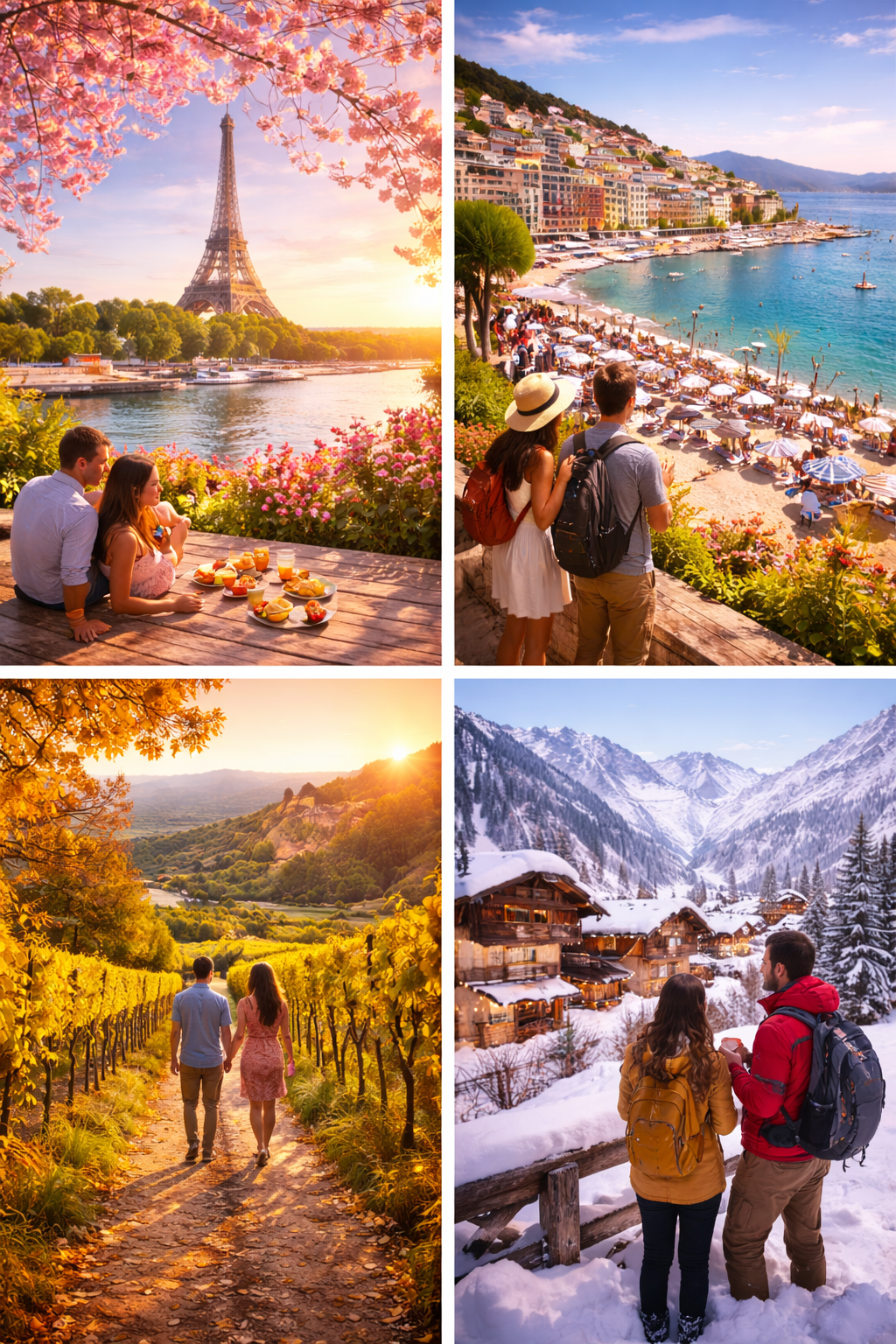
France welcomes visitors year-round, but timing your trip strategically transforms a good vacation into an exceptional one. The difference between fighting crowds at the Louvre in August versus having intimate museum moments in November, or between wilting in 35°C Provence heat versus sipping rosé in perfect spring sunshine, dramatically shapes your experience.
The best time to visit France is late spring (May-June) or early fall (September-October), when pleasant weather combines with manageable crowds and reasonable prices. However, the ideal timing depends entirely on what you want to do, which regions you plan to visit, and what experiences matter most to you.
This comprehensive guide breaks down France by season, month, and region, covering weather patterns, crowd levels, pricing, and special events. Whether you’re planning a Paris city break, a lavender-field pilgrimage to Provence, a wine harvest experience in Burgundy, or a ski trip in the Alps, you’ll find the optimal timing for your French adventure.
Table of Contents
Quick Answer: When Should You Visit France?
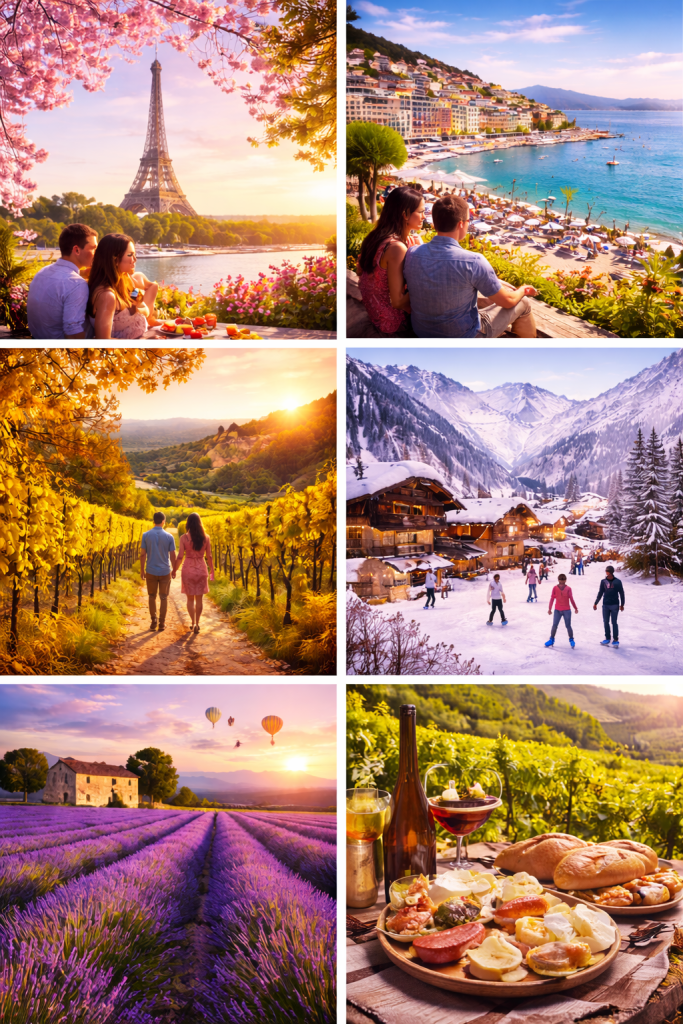
For most travelers, May, June, September, and early October offer the best combination of favorable weather, reasonable crowds, and competitive prices. These shoulder seasons provide the sweet spot between winter’s cold quietude and summer’s expensive chaos.
Spring (April-June) brings blooming gardens, mild temperatures (15-22°C), and lighter tourist traffic. Paris gardens reach peak beauty, and the countryside awakens with wildflowers.
Summer (July-August) delivers the warmest weather and longest days but also peak crowds, highest prices, and scorching heat in southern regions. Many Parisians flee the city in August, creating a paradoxically quiet capital.
Fall (September-November) offers harvest festivals, wine experiences, autumn foliage, and comfortable temperatures. Crowds thin significantly after school resumes, and the light becomes magical for photography.
Winter (December-February) provides the lowest prices and smallest crowds at most attractions, though shorter days and cold weather limit outdoor activities. Christmas markets, Alpine skiing, and cozy café culture shine during this season.
France’s Climate: Understanding Regional Differences
France spans multiple climate zones, making generalized weather predictions misleading. Understanding regional variations helps you pack appropriately and set realistic expectations.
Paris and Northern France
Paris experiences an oceanic climate with mild but changeable weather year-round. Summers are warm (average highs 24-25°C in July) but rarely extremely hot. Winters are cold but not harsh (average highs 7-8°C in January), with occasional snow that rarely accumulates.
Rain falls fairly evenly throughout the year—Paris averages about 20 rainy days in January and 12 in August. Pack layers and a light rain jacket regardless of season. The famous Parisian gray skies are real, particularly from November through March.
Normandy and Brittany to the west experience cooler, wetter conditions with Atlantic influence. Expect more rain and wind, particularly along the coast, but also milder winters than inland areas.
Provence and the Mediterranean Coast
Southern France enjoys a Mediterranean climate with hot, dry summers and mild winters. The French Riviera (Nice, Cannes, Monaco) averages 2,700+ hours of sunshine annually—among the highest in France.
Summer temperatures regularly exceed 30°C (86°F) in Provence and along the coast, sometimes reaching 35°C or higher during heat waves. The Mistral wind—a cold, dry wind blowing down the Rhône Valley—can appear suddenly any time of year, dropping temperatures 10°C within hours.
Winters remain mild along the coast (Nice averages 14°C in January), though inland Provence gets noticeably colder. Rain concentrates in autumn and spring, with November typically the wettest month.
French Alps and Mountain Regions
Alpine regions experience mountain climate with cold winters and cool summers at altitude. Valley floors see different conditions than peaks—Chamonix town (1,035m elevation) differs dramatically from Mont Blanc summit (4,808m).
Winter brings reliable snow from December through April at ski resorts, with temperatures regularly below freezing. Summer offers comfortable hiking weather (15-25°C at moderate elevations) but afternoon thunderstorms are common in July and August.
Atlantic Coast (Bordeaux, Biarritz)
The southwestern Atlantic coast enjoys warmer conditions than Normandy but more rain than the Mediterranean. Bordeaux summers average 26°C with moderate humidity. Winters are mild but wet, with temperatures rarely dropping below freezing.
The Basque Country near Biarritz sees the most rainfall in France, particularly from November through January. However, the region also enjoys warm summers with excellent beach conditions from June through September.
Month-by-Month Guide to Visiting France
January
Weather: Cold throughout France, averaging 4-5°C in Paris and 9-10°C on the Riviera. Snow possible inland and common in the Alps. Short daylight hours (8-9 hours).
Crowds: Minimal. Post-holiday tourism lull creates the year’s quietest period at major attractions. Louvre and Versailles feel almost empty on weekdays.
Prices: Lowest of the year for flights and accommodation outside ski resorts. Hotel rates in Paris often 40-50% below summer peaks.
Best for: Budget travelers, museum enthusiasts, Alpine skiing, experiencing Paris like a local.
What’s happening: Winter sales (Les Soldes d’hiver) begin mid-January; Nice Carnival preparations begin late month; Paris remains vibrant despite cold.
February
Weather: Similar to January but days begin lengthening. Temperatures average 5-6°C in Paris, 10°C on the Riviera. Alpine snow conditions typically excellent.
Crowds: Still low except during French school holidays (two weeks varying by region). Ski resorts see higher traffic during holiday periods.
Prices: Good value continues except during school holidays when family destinations increase rates.
Best for: Skiing, Nice Carnival, early museum visits, budget Paris trips.
What’s happening: Nice Carnival (one of the world’s largest) brings parades, flowers, and festivities to the Riviera. Paris Fashion Week (late February/early March) attracts industry attention.
March
Weather: Spring begins arriving, though weather remains unpredictable. Paris averages 12-13°C but can swing from 5°C to 20°C within a week. Southern France warms faster.
Crowds: Low to moderate. Tourism increases around Easter (dates vary) but remains manageable.
Prices: Good value continues outside Easter week, when prices spike at family destinations.
Best for: Early spring gardens, uncrowded châteaux visits, transitioning from winter to spring activities.
What’s happening: Gardens begin awakening; café terraces start opening; daylight increases noticeably.
April
Weather: Genuinely springlike throughout most of France. Paris averages 16-17°C; Provence reaches 18-20°C. Rain possible anywhere but less frequent. Wildflowers bloom across the countryside.
Crowds: Moderate, increasing toward month’s end. Easter holidays (if in April) bring family travelers. Still far fewer tourists than summer.
Prices: Rising but still reasonable. Book ahead for Easter and any bridge weekends (ponts) when French take long weekends.
Best for: Paris gardens (Tuileries, Luxembourg, Versailles), Loire Valley châteaux, early Provence visits, comfortable sightseeing weather.
What’s happening: Gardens reach spring peak; outdoor café season fully opens; Paris Marathon (early April).
May
Weather: Beautiful across France. Paris averages 20°C with long, pleasant days. Provence approaches perfect conditions (22-24°C). French Riviera becomes beach-worthy (20-22°C sea temperature emerging).
Crowds: Moderate but increasing. Multiple French holidays (May 1, May 8, Ascension) create long weekends with domestic travel. International tourism increases significantly.
Prices: Rising toward summer levels. Book accommodations 2-3 months ahead for popular destinations.
Best for: Nearly everything—Paris, Provence, Loire Valley, Normandy, wine regions. Arguably the best month to visit France overall.
What’s happening: Cannes Film Festival (mid-May) brings glamour to the Riviera; Monaco Grand Prix (late May); outdoor dining in full swing everywhere; early lavender may appear in Provence by late month.
June
Weather: Early summer perfection in most regions. Paris averages 23-24°C with long daylight (16+ hours). Provence and Riviera become hot (25-30°C). Mountain hiking season begins.
Crowds: High and increasing throughout the month. Summer tourism officially begins, especially after schools release.
Prices: Summer rates take effect at most destinations. Book 3+ months ahead for popular spots.
Best for: Beach destinations (before peak heat), Normandy (D-Day anniversary June 6), Alpine hiking, long evening strolls, early lavender fields.
What’s happening: Fête de la Musique (June 21) brings free concerts nationwide; lavender begins blooming in Provence; D-Day commemorations in Normandy; longest days of the year.
July
Weather: Hot throughout France. Paris averages 25°C but heat waves can push temperatures above 35°C. Provence and the Riviera regularly exceed 30°C. Mountain regions offer relief (15-25°C at elevation).
Crowds: Peak season. Major attractions require advance booking and patience. Beaches are crowded. Popular villages feel overrun.
Prices: Highest of the year. Book months in advance; expect to pay premium rates everywhere.
Best for: Lavender fields (peak bloom early-mid July), beaches, mountain escapes, Tour de France watching, Bastille Day celebrations.
What’s happening: Bastille Day (July 14) brings nationwide celebrations and Paris fireworks; Tour de France passes through various regions; lavender festivals in Provence (Valensole festival typically third Sunday); Avignon Festival (theater, dance, music).
August
Weather: Hottest month in most regions. Paris averages 25°C; Provence and Riviera regularly hit 32-35°C. Afternoon thunderstorms possible in mountains. Sea temperatures peak (23-24°C on Riviera).
Crowds: Extremely high at coastal destinations and tourist sites. However, Paris empties as residents flee—creating paradoxically good conditions for city sightseeing. Many small businesses close for annual vacation.
Prices: Peak summer rates continue. Coastal accommodations command premiums.
Best for: Beach vacations (if you tolerate crowds), Paris (surprisingly quiet), late lavender at higher elevations (Sault festival August 15), mountain hiking.
What’s happening: French vacation exodus creates cultural closures in cities but packed beaches; Sault Lavender Festival (August 15); many restaurants in Paris close for summer break.
September
Weather: Glorious early autumn. Paris averages 21°C with golden light photographers treasure. Provence cools to comfortable 24-26°C. Sea remains warm on Riviera (22°C). Mountain weather stabilizes.
Crowds: Moderate and decreasing throughout month. Families return to school, leaving destinations to couples and independent travelers. Wine regions see tourism increase for harvest.
Prices: Dropping from summer peaks but still solid value. Excellent time to find quality accommodations at reasonable rates.
Best for: Wine harvest experiences, Provence and Riviera without peak crowds, Paris with perfect weather, photography, Loire Valley, all-around ideal conditions.
What’s happening: Wine harvest (vendanges) begins in many regions; Heritage Days (third weekend) open normally closed monuments; Montmartre Grape Harvest Festival (early October, preparations begin); autumn markets begin.
October
Weather: True autumn arrives. Paris averages 16-17°C with increasing chance of rain. Provence remains pleasant (20-21°C). Fall foliage colors peak mid-month in many regions. Days shorten noticeably.
Crowds: Low to moderate. Tourism drops significantly after school holidays end. Wine regions stay busy through harvest.
Prices: Good value returns. Shoulder season rates at most destinations.
Best for: Wine harvest festivals, fall foliage, uncrowded museum visits, Alsace (pre-Christmas market prep), comfortable hiking weather.
What’s happening: Montmartre Grape Harvest Festival (early October); Burgundy harvest celebrations; fall food festivals featuring mushrooms, game, truffles; Nuit Blanche arts festival in Paris (early October).
November
Weather: Cool and increasingly gray. Paris averages 10-11°C with notable rainfall. Provence cools to 15-16°C. Riviera remains mild (17°C) but experiences autumn storms. Alps prepare for ski season with early snow.
Crowds: Low. Pre-Christmas lull creates excellent conditions for museum visits and authentic local experiences.
Prices: Dropping toward winter lows. Excellent value except during bridge weekends around November 1 (All Saints’ Day) and November 11 (Armistice Day).
Best for: Museums without crowds, truffle season beginning, atmospheric Paris, early Christmas market previews (Strasbourg opens late November).
What’s happening: All Saints’ Day (November 1) brings cemetery visits and closures; Beaujolais Nouveau release (third Thursday); Dijon Gastronomy Fair; Christmas market preparations begin.
December
Weather: Cold but festive. Paris averages 7-8°C with possibility of snow (rare but magical). Alps offer early season skiing. Riviera remains relatively mild (13-14°C) and sunny.
Crowds: Moderate, increasing toward Christmas and New Year’s. Christmas markets attract visitors to Alsace and other regions.
Prices: Mixed—generally low except during holiday periods and at Christmas market destinations. Ski resorts enter high season.
Best for: Christmas markets (especially Alsace), festive Paris atmosphere, Alpine skiing, holiday shopping, cozy café culture.
What’s happening: Christmas markets throughout France (Strasbourg’s is most famous, running late November through December 30); Paris decorations and illuminations; New Year’s Eve celebrations; truffle markets in Provence.
Best Time to Visit France by Activity
Wine Tasting and Vineyard Tours
Best timing: September-October for harvest experiences; May-June and September-October for touring without extreme weather.
The wine harvest (vendanges) typically runs mid-September through mid-October, varying by region and grape variety. Champagne usually harvests first (late August-early September), followed by Burgundy and Bordeaux. Visiting during harvest provides unique experiences—watching grapes arrive at wineries, participating in harvest festivals, tasting fresh juice—but wineries are extremely busy and may limit tours.
For relaxed vineyard touring with full attention from winemakers, visit before harvest (May-June) or after (late October). Spring vineyard visits show budding vines and blooming wildflowers. Late autumn offers fewer crowds and often the year’s first releases.
Lavender Fields in Provence
Best timing: Late June through early August, with peak bloom typically early-to-mid July.
Lavender timing varies by altitude and weather conditions each year. Lower-elevation fields around Valensole (500m) bloom earliest, typically late June through mid-July. The Valensole Lavender Festival occurs the third Sunday of July. Higher-elevation fields around Sault (800m) bloom later, remaining colorful through mid-August. The famous Sault Lavender Festival falls on August 15.
For guaranteed blooms with manageable heat, target the first two weeks of July. Arrive at fields early morning (before 9 AM) for best light and fewer crowds. The Sénanque Abbey lavender field is the most photographed and most crowded—visit at dawn or consider alternatives.
Skiing in the French Alps
Best timing: January-March for reliable snow; December and April offer good conditions with fewer crowds.
French ski resorts typically open mid-December and close mid-April, with best conditions January through March. January offers excellent snow but very cold temperatures. February brings school holidays (British half-term and French winter break) with corresponding crowds. March provides lengthening days, warmer temperatures, and often the season’s most stable snow conditions.
High-altitude resorts like Val Thorens (2,300m base) and Tignes (2,100m base) offer the longest seasons and most reliable snow. Lower-altitude resorts vary more with weather conditions.
Beach Holidays
Best timing: Late June through September for swimming; May-June for coastal touring without extreme heat.
Mediterranean sea temperatures reach comfortable swimming levels (21°C+) by mid-June and remain warm through September (22-23°C). The warmest sea conditions occur August-September. The French Riviera is busiest (and most expensive) July-August; June and September offer excellent conditions with fewer crowds.
Atlantic coast beaches (Biarritz, La Rochelle, Brittany) are cooler overall. Water temperatures peak in August at 20-22°C. The Atlantic provides better surfing conditions year-round.
Christmas Markets
Best timing: Late November through December, with peak atmosphere the two weeks before Christmas.
Strasbourg hosts France’s most famous Christmas market, operating from late November through December 30. The Alsace region offers multiple markets in charming half-timbered villages like Colmar, Riquewihr, and Kaysersberg. Paris opens multiple markets throughout the city. Lyon and other cities offer their own traditions.
Visit the first week of December for full market operation with lighter crowds, or the week before Christmas for maximum festivity (and maximum crowds).
Best Time to Visit France by Region
Paris
Paris works year-round, but May, June, September, and October offer optimal conditions. These months combine pleasant weather (16-24°C), manageable crowds, and full cultural programming.
Surprisingly, August can be excellent for Paris specifically—Parisians flee to the coast, leaving the city quieter than usual. Some restaurants close for annual vacation, but museums and major attractions operate normally.
Winter (November-February) offers the lowest crowds and prices but cold, gray weather that limits outdoor enjoyment. The tradeoff may be worthwhile for museum-focused visits.
Avoid Easter week and French school holidays (two weeks each in February, April, late June/July, and late October) when domestic tourism swells.
Provence
Provence has distinct optimal windows depending on priorities.
May-June: Perfect weather (22-26°C), blooming countryside, pre-summer crowds, excellent market conditions.
Early July: Lavender peak, warm but not yet scorching, festive atmosphere. Book months ahead.
September-October: Harvest season, comfortable temperatures, wine experiences, quieter villages, golden light.
Avoid July 14-August 15 if possible—extreme heat, peak crowds, and premium prices converge.
French Riviera
The Riviera attracts visitors year-round thanks to its mild climate.
May-June: Ideal balance of warm weather (22-26°C), manageable crowds, and sea temperatures becoming swimmable. Cannes Film Festival (mid-May) and Monaco Grand Prix (late May) bring excitement and crowds.
September: Summer conditions with reduced crowds as families return to school. Sea remains warm (22-23°C).
July-August: Peak beach season with very hot weather (30-35°C), extreme crowds, and premium prices. Acceptable if beach time is your priority.
Winter: Mild weather (13-15°C), minimal crowds, authentic local atmosphere. Nice Carnival (February) provides festive entertainment. Not swimming weather, but excellent for cultural exploration.
Loire Valley
The château country works well from April through October, with May-June and September offering optimal conditions.
Spring brings gardens into bloom around the châteaux, while autumn provides comfortable touring temperatures and fall colors. Summer brings tourist crowds but longer opening hours.
Many smaller châteaux reduce hours or close November through March.
Normandy and Brittany
Northwestern France is coolest and wettest, making June through September the most reliable period. However, this region rewards visits year-round for those tolerant of variable weather.
D-Day anniversary (June 6) brings commemorative events and crowds to the Normandy beaches. The week around June 6 offers special programming but requires advance booking.
September-October provides good weather, fall colors, and harvest festivals including cider and Calvados production.
Crowd Levels and How to Avoid Them
France receives over 89 million visitors annually, with tourism concentrated in summer months and at major attractions. Strategic timing and planning dramatically improve experiences, thats why you need a proper France Itinerary.
Peak Crowd Periods
Worst crowds: July 14-August 15, Easter week, French school holidays High crowds: June, late August, Christmas/New Year period at ski resorts Moderate crowds: May, September, October, Christmas market season in Alsace Low crowds: November, January-March (except school holidays)
Strategies for Popular Attractions
Book timed-entry tickets for the Eiffel Tower, Louvre, Versailles, and other major sites months in advance during peak season.
Arrive at opening for best experiences—first-entry crowds dissipate within an hour at most museums.
Visit during lunch hours (12-2 PM) when French tourism tradition creates a brief lull at some sites.
Consider late afternoon/evening visits where possible—museums often empty before closing as day-trippers return to hotels.
Explore secondary attractions that offer similar experiences with fewer crowds: Château de Vaux-le-Vicomte instead of Versailles, Musée de l’Orangerie instead of the Louvre’s Impressionist galleries.
Price Considerations by Season
Peak Season (July-August)
Expect to pay 30-50% more for accommodation versus shoulder seasons. Flight prices from North America and other long-haul origins also peak. Popular hotels book months in advance; last-minute options are limited and expensive.
Shoulder Season (April-June, September-October)
Best value period combining good weather with reasonable prices. Hotel rates typically 20-30% below peak. More availability and flexibility. Flight prices moderate.
Low Season (November-March)
Lowest prices of the year, often 40-50% below summer peaks at city hotels. Excellent value for museum-focused trips. Mountain resorts remain expensive during ski season; beach destinations offer deep discounts but limited services.
Money-Saving Tips
Book TGV train tickets early—prices double or triple when purchased last-minute versus 2-3 months ahead.
Travel mid-week when hotel rates often drop 10-20% versus weekends.
Consider apartment rentals for stays of 4+ nights—kitchen access reduces meal costs significantly.
Use museum passes (Paris Museum Pass, etc.) when visiting multiple attractions to save both money and time.
Frequently Asked Questions
What is the cheapest time to visit France?
January through early March (excluding French school holidays) offers the lowest prices for flights and accommodation. November also provides excellent value. Expect savings of 30-50% compared to summer peak season, though you’ll trade warm weather for budget benefits.
When is the best weather in France?
May through September provides the warmest, driest conditions across most regions. June offers an excellent balance of warm weather without extreme heat. September provides “second summer” conditions with golden light and fewer crowds than peak summer.
When should I avoid visiting France?
Avoid the August 1-15 period if possible—extreme heat in southern regions, peak crowds at tourist sites, many Parisian restaurants closed, and highest prices converge. Also avoid major holiday weekends (Easter, May 1, July 14) unless specifically seeking those celebrations.
What’s the best month to see lavender in Provence?
Early-to-mid July typically offers peak lavender bloom at most elevations. Higher-altitude fields around Sault remain colorful through mid-August. Weather variations affect exact timing each year, so check current conditions before traveling.
Is France crowded in September?
September offers significantly reduced crowds compared to July-August, making it one of the best months to visit. The first week sees lingering summer tourists, but crowds thin substantially after French schools resume. Wine regions experience harvest-season tourism but remain manageable.
When is ski season in the French Alps?
Most resorts operate mid-December through mid-April. January through March offers the most reliable snow conditions. High-altitude resorts (Val Thorens, Tignes) sometimes extend seasons into May.